

What sports data monitoring does the Anyfit Upright bike's smart interaction system support?
Release Time : 2026-04-04
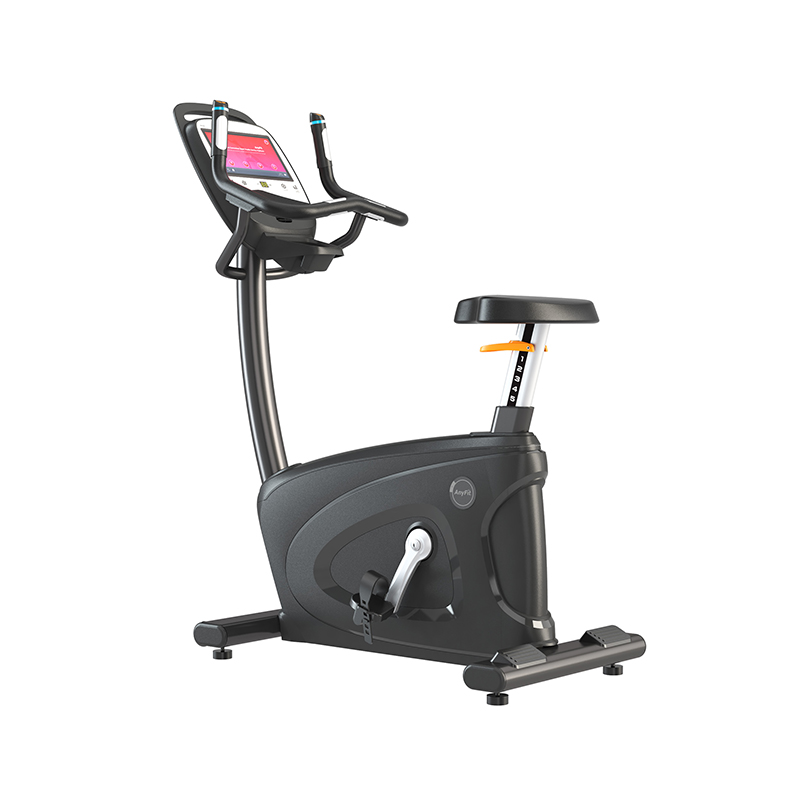
The Anyfit Upright Bike, an innovative product in the smart fitness field, provides users with a scientific and personalized exercise experience through its intelligent interactive system, which monitors data from multiple dimensions and provides real-time feedback. This system, centered on a sensor network, integrates three main categories of data monitoring functions: performance, physiological indicators, and equipment status, forming a complete closed loop for exercise and health management.
Regarding performance monitoring, the system uses high-precision sensors to capture key parameters during cycling in real time. Power output, a key indicator reflecting exercise intensity, accurately quantifies the energy consumption of each pedal stroke, helping users scientifically plan their training load. RPM monitoring records pedal rotation frequency using magnetic induction technology, and combined with resistance adjustment data, dynamically analyzes the user's cadence efficiency and muscle activation patterns. The mileage accumulation function not only records the distance of a single exercise session but also generates periodic exercise reports, intuitively displaying the user's training progress and endurance improvement trends. Speed change curves, through real-time sampling and algorithm fitting, transform instantaneous speed into a visual chart, allowing users to clearly perceive the effects of adjusting their exercise rhythm.
Physiological indicator monitoring is another core function of this system. Heart rate monitoring is achieved through handheld sensors or a wireless chest strap, continuously tracking the user's heart rate fluctuations. The system's built-in heart rate zone algorithm automatically divides training into different phases such as warm-up, fat burning, aerobic, and anaerobic, and guides users to adjust exercise intensity through voice prompts, ensuring both training effectiveness and safety. Calorie consumption calculation is based on multi-dimensional data such as user weight, exercise duration, and power output, dynamically correcting the results using the internationally recognized metabolic equivalent formula to provide users with accurate energy consumption feedback. Some high-end models also feature blood oxygen saturation monitoring, especially suitable for middle-aged and elderly users or rehabilitation training scenarios, preventing the risk of overtraining by monitoring blood oxygen levels in real time.
The device status monitoring function focuses on improving user experience and extending device lifespan. Resistance system status monitoring uses pressure sensors to provide real-time feedback on the adjustment accuracy of magnetoresistive or triboelectric resistance. When abnormal resistance output is detected, the system automatically calibrates and prompts the user for maintenance. Pedal balance detection analyzes pedaling symmetry using left and right foot force sensors to help users correct unilateral force habits and reduce the risk of sports injuries. The seat position memory function records the user's adjusted seat height and fore-aft position through an encoder, allowing for one-click restoration of the optimal riding posture the next time the device is used. The equipment's stability monitoring uses an accelerometer to detect the amplitude of vehicle body sway. When abnormal vibrations are detected, it immediately alerts the user to check the balance of the footing or the flatness of the ground.
The intelligent interactive system's data integration capabilities are a significant advantage. All monitoring data is synchronized in real-time to a mobile app or cloud platform via Bluetooth or Wi-Fi, allowing users to view detailed exercise reports after training. The system's built-in AI analysis engine can predict the user's athletic ability development trend based on historical data and generate personalized training suggestions. For example, if the system detects a slowing heart rate recovery rate for a week, it will suggest reducing training intensity or adding rest days; if it finds that the user's calorie consumption is consistently below the target value, it will recommend higher-intensity interval training courses.
The system's user experience design is also noteworthy. The large LCD screen features an anti-glare design, ensuring clear data display even in bright light. Touch feedback technology makes operation more intuitive; users can quickly switch display interfaces or adjust training modes using gestures such as swiping and clicking. The voice interaction function supports bilingual (Chinese and English) command recognition, allowing users to query exercise data or start training programs without manual operation. Some models also feature an emergency stop button; when the heart rate exceeds a safe threshold or is triggered by the user, the device immediately stops operating and issues an alarm.
The Anyfit Upright bike's intelligent interactive system redefines the scientific standards of home fitness through comprehensive data monitoring and intelligent analysis. From athletic performance to physiological indicators, from device status to user experience, every detail reflects the profound empowerment of health by technology. This data-driven approach to fitness not only helps users achieve their training goals more efficiently but also builds a preventative exercise protection mechanism through continuous health monitoring, truly achieving a perfect fusion of technology and health.