

How do stair climbers for aerobic exercise achieve precise control of training intensity through resistance adjustment systems?
Release Time : 2026-04-10
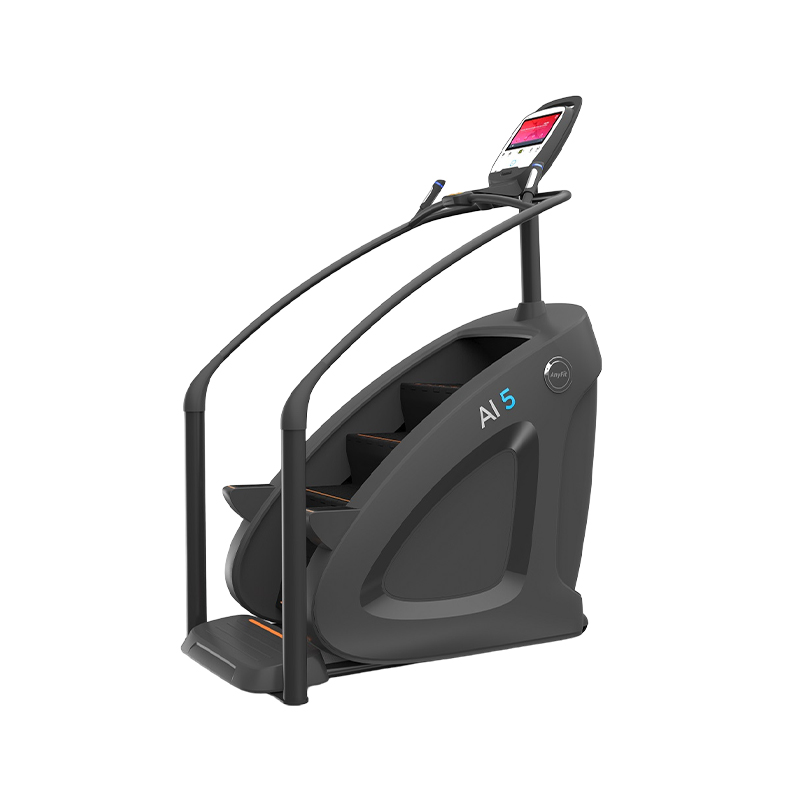
As training equipment that simulates the act of climbing stairs, the core of stair climbers lies in controlling exercise intensity through a resistance adjustment system, allowing users to achieve suitable training effects at different fitness levels and training goals. Precise resistance control not only affects exercise efficiency but also directly impacts safety and the training experience.
1. Resistance Sources and Mechanical Structure Design
The resistance of stair climbers primarily comes from the motor load, magnetic resistance system, or hydraulic damping structure. By adjusting the output resistance of these systems, the force required for each step can be changed. For example, electromagnetic resistance systems can quickly adjust the resistance level through changes in current, offering fast response and high control precision; while hydraulic systems provide smoother resistance changes, suitable for continuous aerobic training. Combining different resistance types can cover multi-level training needs from light to high intensity.
2. Multi-level Adjustment and Refined Control
To achieve different training intensities, stair climbers typically offer multiple resistance levels, gradually increasing from beginner to advanced. High-end equipment also supports stepless adjustment, allowing for more precise resistance changes. Users can freely choose the appropriate resistance level based on their heart rate, fitness level, or training goals, thus avoiding excessive or insufficient exercise intensity. This refined control makes training more scientific and personalized.
3. Sensor Feedback and Real-Time Adjustment
Modern stair climbers are typically equipped with multiple sensors to monitor data such as the user's cadence, stride length, and heart rate. By collecting this information in real time, the system can dynamically adjust the resistance to keep the exercise within the target intensity range. For example, when the system detects that the user's heart rate is too high, it can automatically reduce the resistance; conversely, it can appropriately increase the intensity. This closed-loop control mechanism significantly improves the safety and effectiveness of training.
4. Intelligent Algorithms and Personalized Training
With the trend of intelligent development, stair climbers are gradually introducing algorithmic control to achieve personalized training programs. The system can automatically generate resistance change curves based on the user's historical data and current status, simulating real stair climbing or interval training scenarios. For example, in high-intensity interval training, the equipment will periodically increase and decrease the resistance, allowing the user to switch between different intensities, thereby improving cardiopulmonary function and fat-burning efficiency.
5. Human-Computer Interaction and Ease of Operation
The ease of resistance adjustment also impacts user experience. Users can quickly adjust resistance levels via touchscreen, buttons, or knobs. Simultaneously, the interface displays real-time information such as current intensity, calories burned, and exercise time, providing users with a clear understanding of their training status. Some devices also support preset programs, allowing one-click activation of different training modes, further simplifying the operation process.
6. System Stability and Safety Assurance
Under high-intensity training, the resistance system needs to maintain stable output to avoid safety risks caused by sudden changes. Therefore, the equipment is typically equipped with overload protection and soft-start mechanisms to ensure smooth and controllable resistance changes. Furthermore, optimizing the transmission structure and motor performance reduces operating noise and vibration, improving overall user comfort.
In summary, aerobic stair climbers achieve precise adjustment of training intensity through the synergistic effect of mechanical resistance structure, sensor feedback, and intelligent control system. This design not only meets the diverse needs of different users but also makes the exercise process safer, more efficient, and more scientific, thereby improving overall fitness results.
1. Resistance Sources and Mechanical Structure Design
The resistance of stair climbers primarily comes from the motor load, magnetic resistance system, or hydraulic damping structure. By adjusting the output resistance of these systems, the force required for each step can be changed. For example, electromagnetic resistance systems can quickly adjust the resistance level through changes in current, offering fast response and high control precision; while hydraulic systems provide smoother resistance changes, suitable for continuous aerobic training. Combining different resistance types can cover multi-level training needs from light to high intensity.
2. Multi-level Adjustment and Refined Control
To achieve different training intensities, stair climbers typically offer multiple resistance levels, gradually increasing from beginner to advanced. High-end equipment also supports stepless adjustment, allowing for more precise resistance changes. Users can freely choose the appropriate resistance level based on their heart rate, fitness level, or training goals, thus avoiding excessive or insufficient exercise intensity. This refined control makes training more scientific and personalized.
3. Sensor Feedback and Real-Time Adjustment
Modern stair climbers are typically equipped with multiple sensors to monitor data such as the user's cadence, stride length, and heart rate. By collecting this information in real time, the system can dynamically adjust the resistance to keep the exercise within the target intensity range. For example, when the system detects that the user's heart rate is too high, it can automatically reduce the resistance; conversely, it can appropriately increase the intensity. This closed-loop control mechanism significantly improves the safety and effectiveness of training.
4. Intelligent Algorithms and Personalized Training
With the trend of intelligent development, stair climbers are gradually introducing algorithmic control to achieve personalized training programs. The system can automatically generate resistance change curves based on the user's historical data and current status, simulating real stair climbing or interval training scenarios. For example, in high-intensity interval training, the equipment will periodically increase and decrease the resistance, allowing the user to switch between different intensities, thereby improving cardiopulmonary function and fat-burning efficiency.
5. Human-Computer Interaction and Ease of Operation
The ease of resistance adjustment also impacts user experience. Users can quickly adjust resistance levels via touchscreen, buttons, or knobs. Simultaneously, the interface displays real-time information such as current intensity, calories burned, and exercise time, providing users with a clear understanding of their training status. Some devices also support preset programs, allowing one-click activation of different training modes, further simplifying the operation process.
6. System Stability and Safety Assurance
Under high-intensity training, the resistance system needs to maintain stable output to avoid safety risks caused by sudden changes. Therefore, the equipment is typically equipped with overload protection and soft-start mechanisms to ensure smooth and controllable resistance changes. Furthermore, optimizing the transmission structure and motor performance reduces operating noise and vibration, improving overall user comfort.
In summary, aerobic stair climbers achieve precise adjustment of training intensity through the synergistic effect of mechanical resistance structure, sensor feedback, and intelligent control system. This design not only meets the diverse needs of different users but also makes the exercise process safer, more efficient, and more scientific, thereby improving overall fitness results.