

How Does a Seated Shoulder Press Improve Stability?
Release Time : 2026-05-21
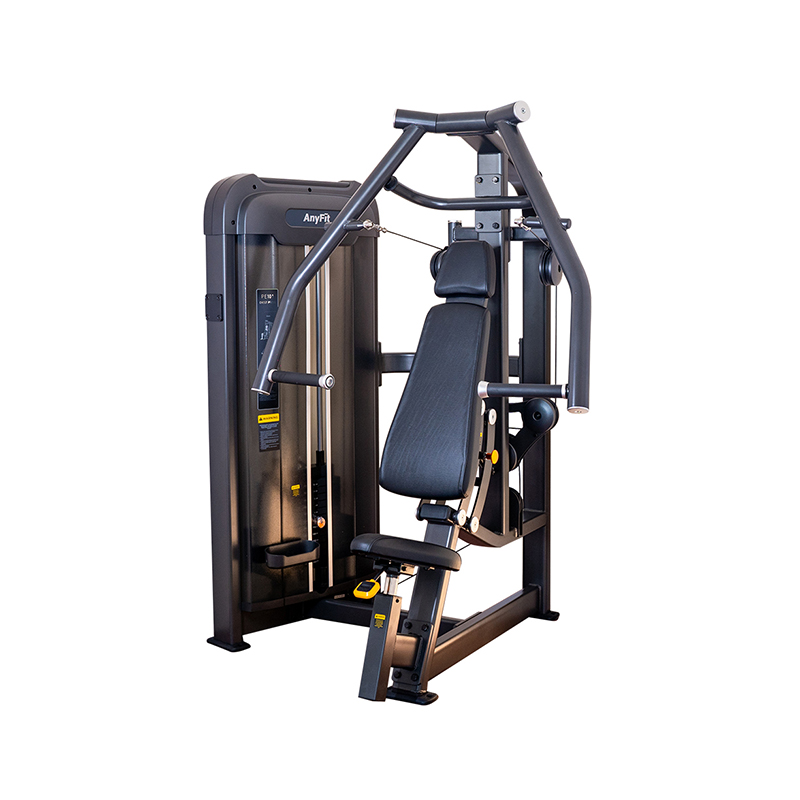
The seated shoulder press machine stands as a fundamental piece of equipment in strength training, widely recognized for its ability to build upper body power while significantly enhancing physical stability. Unlike free-weight alternatives such as dumbbells or barbells, which demand a high degree of balance and coordination, the seated shoulder press provides a controlled environment that allows users to focus intensely on muscle stimulation without the constant threat of losing equilibrium. This inherent design makes it an exceptional tool for improving stability, particularly for beginners or those recovering from injuries.
A primary way this machine improves stability is by eliminating the need for excessive torso stabilization. When performing standing overhead presses with free weights, the body must recruit numerous core muscles and stabilizers just to keep the spine upright and prevent swaying. While this is beneficial for advanced athletes, it can be overwhelming for novices. The seated shoulder press removes this variable by securing the user's lower body and back against a stable seat and backrest. With the pelvis and torso firmly anchored, the kinetic chain is simplified. This solid base ensures that the force generated comes purely from the targeted upper body muscles rather than being dissipated through unnecessary body movements or compensatory swaying.
Furthermore, the fixed movement path of the machine plays a crucial role in teaching proper biomechanical stability. Free-weight exercises require the lifter to not only push the weight up but also to control the bar or dumbbells laterally, preventing them from drifting forward or backward. Any deviation in the path can lead to joint strain or a loss of balance. In contrast, the seated shoulder press guides the handles along a pre-determined, optimized trajectory. This guidance helps users ingrain the correct motor patterns for a vertical push. By repeatedly practicing this smooth, linear motion, the nervous system learns to coordinate the deltoids, triceps, and upper chest muscles efficiently, fostering a sense of joint stability that can eventually translate to other movements.
Safety is another critical aspect of how this machine fosters stability. Incorrect posture during free-weight training often leads to arching the lower back excessively or shrugging the shoulders, both of which compromise structural integrity and increase the risk of ligament damage. The supportive design of the seated shoulder press encourages a neutral spine and keeps the shoulder blades in a safer, more retracted position. Because the user does not have to expend mental and physical energy worrying about dropping a heavy barbell or tipping over, they can maintain strict form throughout the entire set. This consistent adherence to proper alignment strengthens the connective tissues around the shoulder girdle in a safe, progressive manner.
Ultimately, the seated shoulder press serves as an ideal bridge to more complex stability challenges. By allowing individuals to build raw strength in the deltoids and supporting arm muscles within a secure framework, it lays the necessary physiological foundation for future training. As the prime movers become stronger and more coordinated through the use of the machine, the body becomes better equipped to handle the stabilizing demands of free weights down the line. Therefore, the seated shoulder press does not just build muscle size; it cultivates a fundamental sense of bodily control and structural resilience, making it an indispensable asset for sustainable fitness progress.
A primary way this machine improves stability is by eliminating the need for excessive torso stabilization. When performing standing overhead presses with free weights, the body must recruit numerous core muscles and stabilizers just to keep the spine upright and prevent swaying. While this is beneficial for advanced athletes, it can be overwhelming for novices. The seated shoulder press removes this variable by securing the user's lower body and back against a stable seat and backrest. With the pelvis and torso firmly anchored, the kinetic chain is simplified. This solid base ensures that the force generated comes purely from the targeted upper body muscles rather than being dissipated through unnecessary body movements or compensatory swaying.
Furthermore, the fixed movement path of the machine plays a crucial role in teaching proper biomechanical stability. Free-weight exercises require the lifter to not only push the weight up but also to control the bar or dumbbells laterally, preventing them from drifting forward or backward. Any deviation in the path can lead to joint strain or a loss of balance. In contrast, the seated shoulder press guides the handles along a pre-determined, optimized trajectory. This guidance helps users ingrain the correct motor patterns for a vertical push. By repeatedly practicing this smooth, linear motion, the nervous system learns to coordinate the deltoids, triceps, and upper chest muscles efficiently, fostering a sense of joint stability that can eventually translate to other movements.
Safety is another critical aspect of how this machine fosters stability. Incorrect posture during free-weight training often leads to arching the lower back excessively or shrugging the shoulders, both of which compromise structural integrity and increase the risk of ligament damage. The supportive design of the seated shoulder press encourages a neutral spine and keeps the shoulder blades in a safer, more retracted position. Because the user does not have to expend mental and physical energy worrying about dropping a heavy barbell or tipping over, they can maintain strict form throughout the entire set. This consistent adherence to proper alignment strengthens the connective tissues around the shoulder girdle in a safe, progressive manner.
Ultimately, the seated shoulder press serves as an ideal bridge to more complex stability challenges. By allowing individuals to build raw strength in the deltoids and supporting arm muscles within a secure framework, it lays the necessary physiological foundation for future training. As the prime movers become stronger and more coordinated through the use of the machine, the body becomes better equipped to handle the stabilizing demands of free weights down the line. Therefore, the seated shoulder press does not just build muscle size; it cultivates a fundamental sense of bodily control and structural resilience, making it an indispensable asset for sustainable fitness progress.